
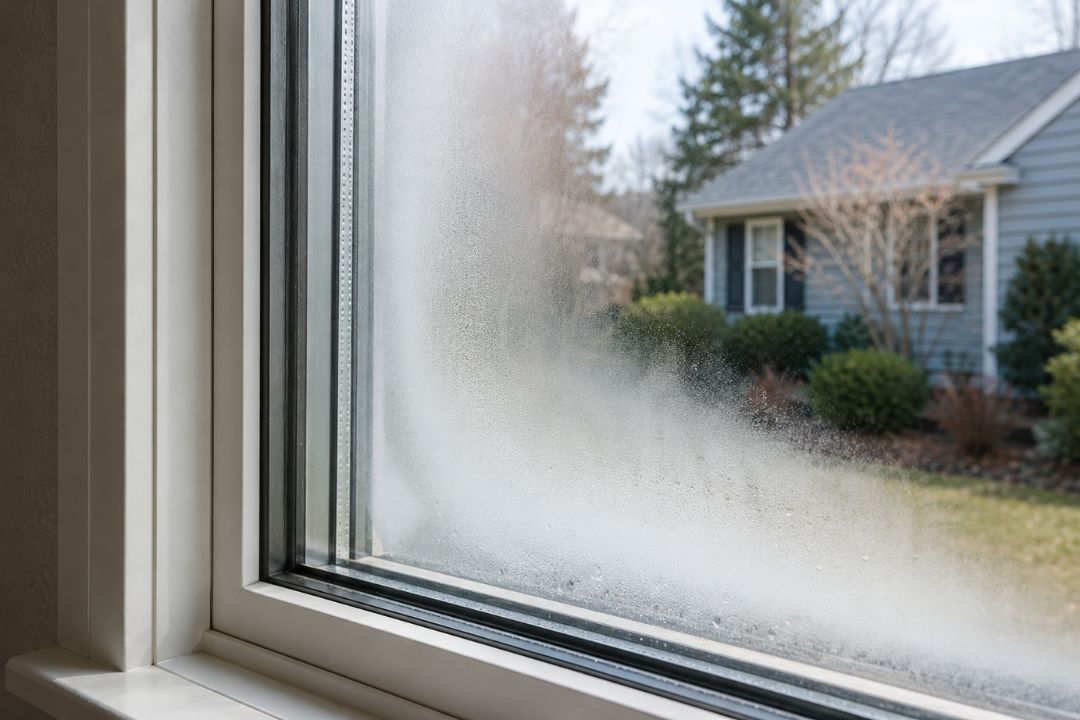
You reach for a paper towel to wipe away the haze on your window, only to realize the fog is not on the surface at all. It is trapped between the panes, completely out of reach, and no amount of cleaning will make it disappear.
If this sounds familiar, you are not alone. It is one of the most common reasons homeowners start researching window replacement in Freedom, and understanding what causes it can help you decide what to do next.
Modern windows are built with two or three panes of glass sealed together, with a layer of insulating gas trapped in between. That seal is what keeps your window energy efficient and your view crystal clear.
When that seal fails, outside air and moisture find their way into the gap. The result is condensation that forms inside the glass itself, which is exactly why do windows fog up between the glass in the first place.
No seal lasts forever. Years of temperature swings, from freezing winter mornings to hot summer afternoons, cause the glass and frame to expand and contract repeatedly.
That constant movement puts stress on the edge seal until it eventually gives way. Older windows, lower quality manufacturing, or windows that faced direct sun exposure for years tend to show this wear sooner than others.
Fog between the panes is the most obvious clue, but it is rarely the only one. Homeowners often notice a few other warning signs before the cloudiness becomes impossible to ignore.
Recognizing these window seal failure signs early can help you address the issue before it affects more of your window or spreads to nearby units.
This is the question we hear most often, and the honest answer depends on the window itself. Once the seal fails, the insulating gas between the panes has already escaped, which means the window is no longer performing the way it was designed to.
Some companies offer defogging services that temporarily clear the glass, but this does not restore the broken seal. In most cases, the fog returns within months because the root problem was never actually fixed.
For homeowners asking can foggy windows be repaired, we are always upfront that a full sash or window replacement is typically the more lasting solution.
A foggy window is not just a cosmetic issue. Once the seal fails, the window loses much of its insulating value, which means your heating and cooling system has to work harder to keep the room comfortable.
Over time, that added strain shows up on your energy bills. What starts as a minor annoyance can quietly become an ongoing expense that adds up far more than the cost of addressing it directly. Addressing failed seals can also protect your home’s window value by improving energy performance and keeping the windows in better overall condition.
Trapped moisture can also point to a broader problem if it lingers, since prolonged condensation sometimes affects the surrounding frame. Catching it early keeps the fix contained to the window itself.
If you are dealing with condensation between your window panes, the first step is figuring out how many windows are affected and how long the problem has been going on. A single foggy window might be an isolated seal failure, while several at once often points to a batch of windows reaching the end of their lifespan together.
Many homeowners search for how to fix condensation between window panes, hoping for a simple at-home solution. Unfortunately, because the seal sits inside the glass unit itself, this is not something that can be reliably repaired without professional replacement.
We start by taking a look at the affected windows in person, since fog patterns and seal failure can vary from one window to the next. From there, we walk homeowners through options that fit their home, their budget, and how long they plan to stay.
Replacing a foggy window is also a good opportunity to upgrade to a more efficient option, since you are already addressing the issue at its source. Many homeowners choose this moment to move from single-pane or older double-pane glass to a better performing window overall. For homeowners looking for additional insulation, triple-pane windows can provide another layer of protection against outdoor temperatures and help improve indoor comfort. Choosing energy-efficient windows can also help reduce heat transfer and improve the overall performance of your home. The right option depends on your existing windows, budget, and comfort goals.
We also make sure the replacement matches the look of your existing windows whenever possible, so the upgrade blends in rather than standing out as an obvious patch.
Seals fail individually, so one window can develop condensation years before nearby windows show the same issue.
It is not typically a safety hazard, but it does signal reduced energy efficiency and a broken window seal.
In some cases a sash or glass unit replacement works, though full window replacement often makes more sense long term.
It varies, but many homeowners notice mild haze first that becomes more visible during humid or cold weather.
Coverage varies by policy, so it is worth checking with your provider, since this is typically considered normal wear and tear.
Foggy glass has a way of getting overlooked until it becomes hard to see past, both literally and in terms of your energy bills. If you have noticed cloudiness building between your panes, stop by our New Brighton showroom or give us a call, and we will help you figure out exactly what your windows need.